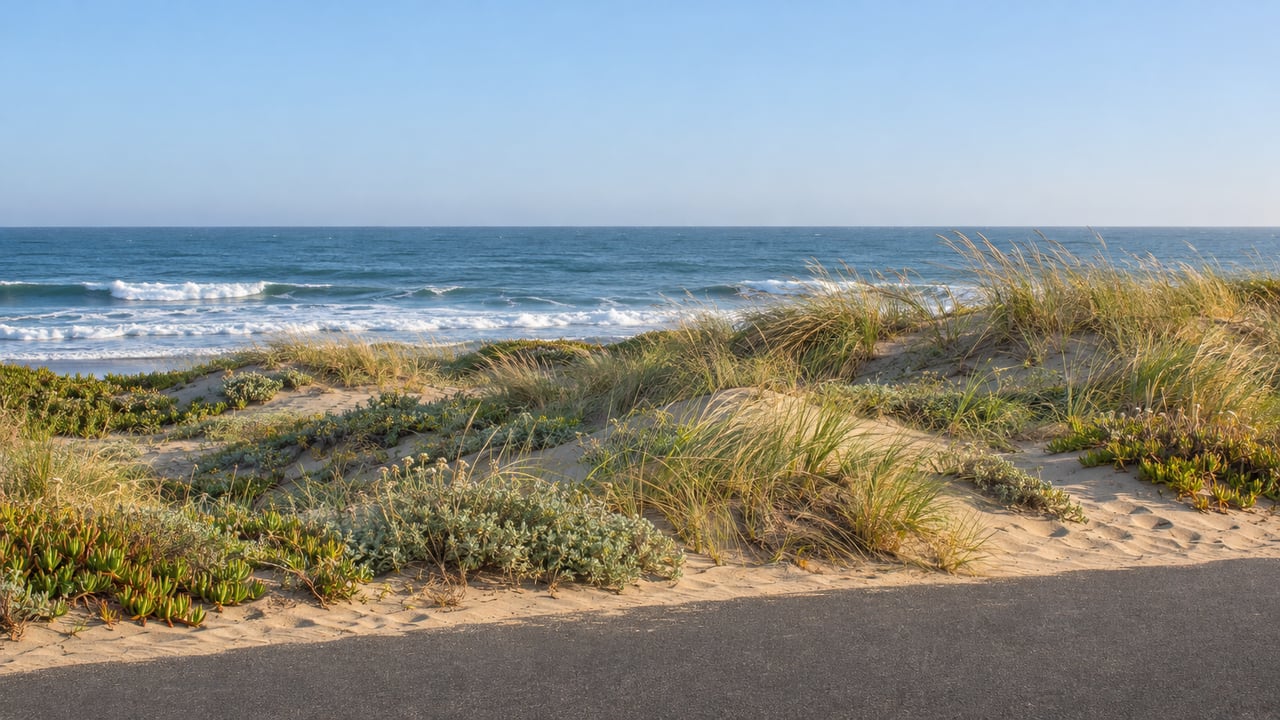
Outer Sunset Homes After the Sunset Dunes Vote: Where Change Is Still Coming
November 19, 2026
November 19, 2026
In November 2024, some of the precincts along the old Upper Great Highway voted against Proposition K by as much as 67%. Two years later, those same precincts voted to keep the road car-free. In the November 3, 2026 election, a majority in every precinct that borders Sunset Dunes voted against reopening the road to weekday traffic, and the closest result was 59% in favor of the park, SFGATE reported.
That change matters to anyone pricing a house west of about 40th Avenue. From the park's opening on April 12, 2025 through this month's election, every home along the beach blocks came with a question attached: would weekday cars come back? That question is now answered. What's left to weigh on these blocks is more specific, and most of it is at the south end of the park.
Citywide, Measure G is failing 65.68% to 34.32%, according to the Department of Elections' preliminary results as of the November 10 update. Those results are still unofficial until the city certifies them, which can take up to 30 days after Election Day. The measure would have closed the park from Monday at 4 a.m. through Friday at 6 p.m. so private vehicles could use the road on weekdays.
For a buyer, the citywide margin says less than the local one. In District 4, the Sunset and Parkside, Measure G was failing by a few hundred votes as of November 10: 16,215 Yes (49.36%) to 16,638 No (50.64%), per the official district breakdown. In 2024, 64% of District 4 voters opposed Prop K, the San Francisco Chronicle reported. In other words, the district went from clearly opposed to evenly split. The biggest change came on the blocks right next to the park, where residents gave up the road and gained the park.
SFGATE also found the opposition softening in the Richmond, which is still the area most opposed to the park. In 2024, more than 80% of voters in some Richmond precincts voted against the park. This year, the strongest Richmond precincts gave the reopening 70%.
Buyers find it hard to price a risk they can't measure. Between Prop K, a lawsuit, a supervisor recall in September 2025, and now Measure G, the Upper Great Highway's future was contested at the ballot box or in court for most of two years. During that time, a house facing the park was really a bet on how the next election would turn out. Some buyers will pay up for a bet like that. Many will offer less or skip the house.
This election's vote pattern makes another reversal hard to picture. The 2024 vote leaned on citywide support that the Sunset didn't share. The 2026 result has a majority citywide plus majorities in every precinct along the park itself. Whatever that turns out to be worth, the kind of risk a buyer takes on here has changed. A buyer looking at a house on the beach blocks this winter is buying next to a park that the city and the closest neighbors have both voted to keep.
Demand in the Outer Sunset was building before the park opened. In December 2024, months before Sunset Dunes opened, SFGATE reported that buyer interest was already climbing, with pending single-family sales up 22% through October 2024 compared with the same stretch a year earlier. Agents quoted then tied that interest to price, room for a home office and closeness to nature. The park added to demand that was already rising.
The other question buyers ask about these blocks is what happened to the cars. The most recent answer comes from a Chronicle analysis published November 1. It used HERE Technologies data to compare January through August 2026 with the same months of 2024. Morning rush-hour speeds fell by at least 10% on 19th Avenue and on Chain of Lakes Drive through Golden Gate Park. They also fell on parts of Geary, Arguello and Fulton in the Richmond, which nobody would call Great Highway detours.
The Chronicle also listed other causes that hit the west side at the same time: Caltrans freeway closures, lane squeezes during the 19th Avenue repaving, and stricter return-to-office rules sending more people to downtown jobs and Peninsula campuses. In practice, a morning drive from the Outer Richmond to the San Francisco Zoo averaged about 16½ minutes this year, up from just under 16 minutes in 2024. The drive from the Presidio to San Francisco State took about 1½ minutes longer.
For blocks closer to the beach, the earlier street-level counts still help. In July 2025, SFMTA reported that Chain of Lakes Drive carried about 2,000 more vehicles a day and Lower Great Highway about 700 more. Upper Great Highway traffic between Fulton and Lincoln dropped 30%, and Sunset Boulevard was running at 90% of its pre-pandemic volume. Those counts are more than a year old and show the early months of the closure. Read them as a guide to which streets absorbed the change, not as today's numbers. For a buyer comparing two houses, the question to ask about a frontage on Lower Great Highway or a corner near Chain of Lakes is different from the one to ask about a mid-block house on 44th Avenue.
North of Sloat, the park's shape is largely set. At Sloat Boulevard and further south, a city project is just getting underway. On November 5, San Francisco Recreation and Parks posted an update on the Ocean Beach Climate Change Adaptation Project. It's a joint effort with the SFPUC, SFMTA and the San Francisco Zoo, and its first round of work is scheduled to start in early 2027 and finish by mid-2027.
That first round includes several changes that people living near Sloat will notice:
An SFMTA Board hearing on the plan is tentatively set for December. Details are posted on the agency's Zoo access project page.
The bigger change comes later. The SFPUC's project page describes moving traffic off the Great Highway between Sloat and Skyline, building a multi-use trail where the road is now, and burying a seawall to protect the wastewater system. Major construction is expected to start in late 2029 and take about four years. Rec and Park's update says the new Zoo entrance is needed for the day the Great Highway Extension south of Sloat closes permanently. That makes the 2027 changes the first step in a longer project.
Sloat has already changed once. SFMTA finished the Sloat Boulevard Quick-Build between the Great Highway and Skyline in mid-December 2025. It added a two-way protected bikeway, better crossings and bus boarding islands. It also turned the south side's angled parking into parallel parking, which cost about 40 curb spaces, and striped about 50 off-street spaces at Sloat and Skyline. Inside the park, Rec and Park announced Shipwreck Cove in July as a privately funded, 6,000-square-foot pilot play area. The plan called for a climbable ship, a slide and sand play under an initial one-year permit.
These findings change how to compare houses inside the Outer Sunset. Near Lincoln Way and up through the middle avenues, the park has been decided by voters, and Rec and Park's 2027 work happens elsewhere. Near Sloat, from 45th through 47th Avenue and along Lower Great Highway, the next few years bring a moved U-turn, a new Zoo gateway, a rerouted bus and, eventually, construction on the Great Highway Extension. Some of those changes will help a particular house and some may not. Either way, a buyer should know where the house sits relative to that work before deciding on a price. Our earlier piece on two zoning layers on the west side makes a similar point about lots that look the same and aren't.
Every one of these questions is being weighed in a tight citywide market. The Chronicle reported in late October that nearly 92% of San Francisco single-family homes sold above asking in September 2026, at an average of nearly 30% over list, up from 13% over in September 2025. The city had 240 single-family homes for sale at the end of September, the lowest September count the paper had seen since at least 2020. When so few houses are for sale, every known feature of a house affects the price, the park included. For current listings, see our Sunset District homes for sale page. For what the park looks like week to week, see our August visit to Sunset Dunes.
If you're comparing a house near Lincoln with one near Sloat, or trying to sort out what the 2027 Zoo access work means for a particular address, I'm glad to go through it block by block. I grew up in the Sunset, and I can walk those streets with you in English, Mandarin or Cantonese. Schedule a free neighborhood consultation with Michael Soon and bring the addresses you're considering.
Stay up to date on the latest real estate trends.
Understanding his client's goals has helped Michael negotiate successful outcomes buyers and sellers on all types of properties throughout the San Francisco region. Real estate, whether buying or selling, can be quite a journey, and Michael will be there every step of the way.