San Bruno Home Sale Airport Noise Disclosure Explained
September 10, 2026
September 10, 2026
Pull up two San Bruno listings this week, one in Belle Air Park and one up the hill in Crestmoor, and you'll find the same paragraph buried in the disclosure package. Word for word. It tells you the property sits within an airport influence area, that you may experience noise, vibration, or odor from normal aircraft operations, and that you should decide for yourself whether that's acceptable before you close.
That sameness is the tell. A flatland bungalow a short walk from the Caltrain platform and a mid-century view home on a curving hillside street are getting identical language, which means the disclosure isn't measuring what's actually happening at either address. It's a floor, not a fingerprint. If you're buying or selling in San Bruno, the paragraph that appears in the disclosure isn't the one that tells you anything useful about the specific house. The one that does is sitting in the preliminary title report, and most buyers never think to ask for it.
California's Business and Professions Code requires anyone selling property within two miles of an airport to disclose that fact to a buyer. San Mateo County's Airport Land Use Commission, run through the City/County Association of Governments, takes that requirement and applies it to the entire county as a single Real Estate Disclosure Area for SFO, from the flatlands near San Bruno's downtown to the hillside neighborhoods above it. The City/County Association of Governments identifies a smaller sub-zone layered on top of that, covering the northern part of the county including San Bruno and triggering extra project-level review for new construction near the airport.
The law was written this way on purpose. A two-mile radius is easy to verify and impossible to dispute. But it also means the disclosure can't distinguish between a house that gets frequent low overflights and one that rarely does. Even within a single hillside neighborhood like Rollingwood, known for its raised ranches and quiet cul-de-sacs, residents describe airport and freeway noise as noticeable depending on the specific block and orientation of the lot. The law draws one line for the whole city.
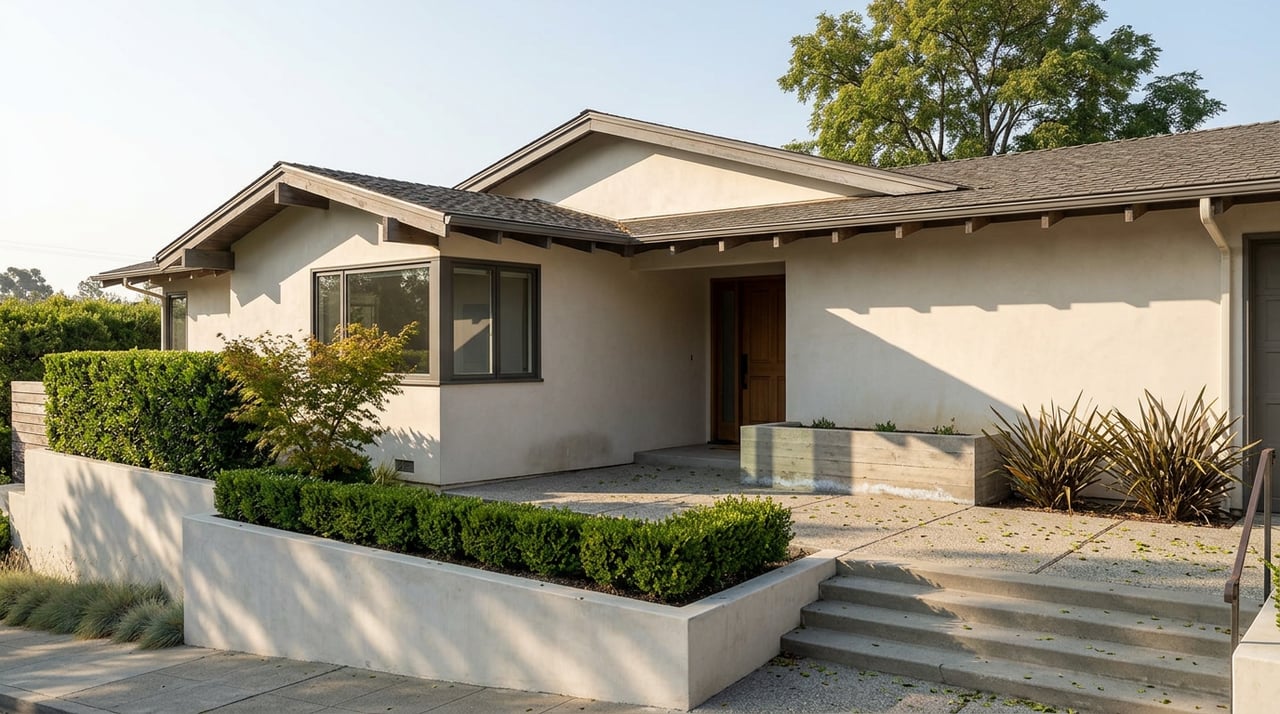
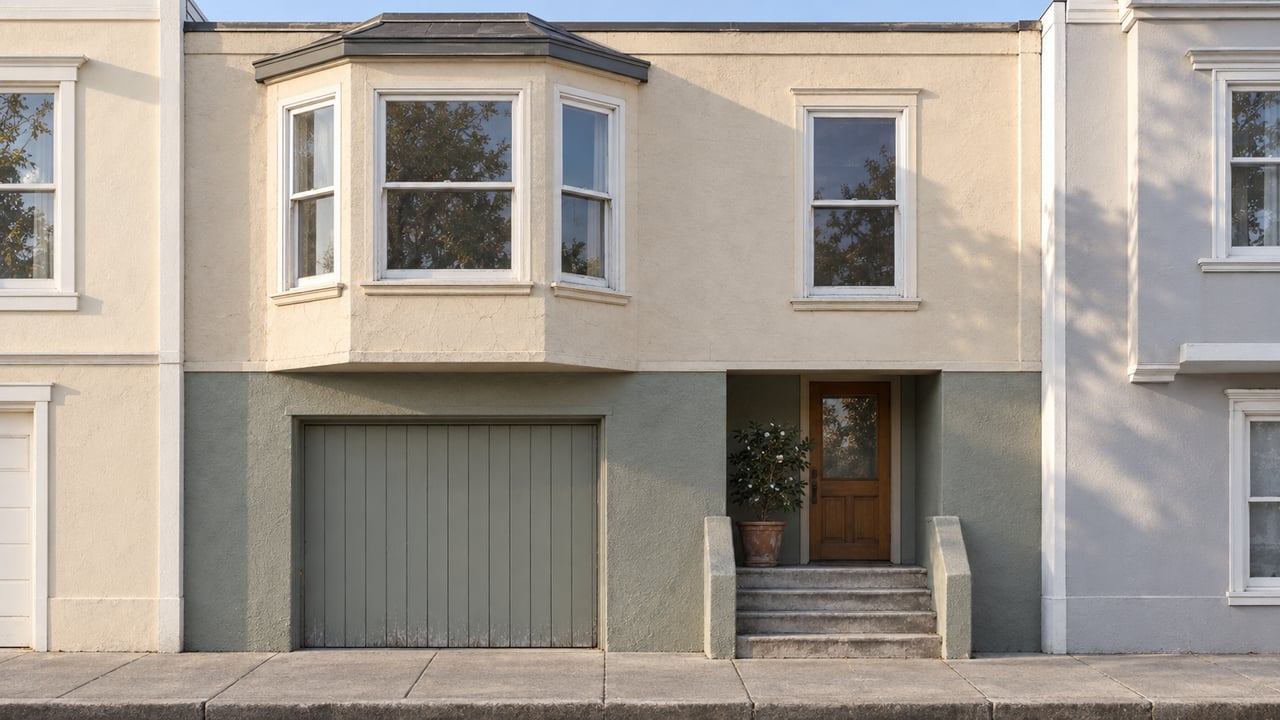
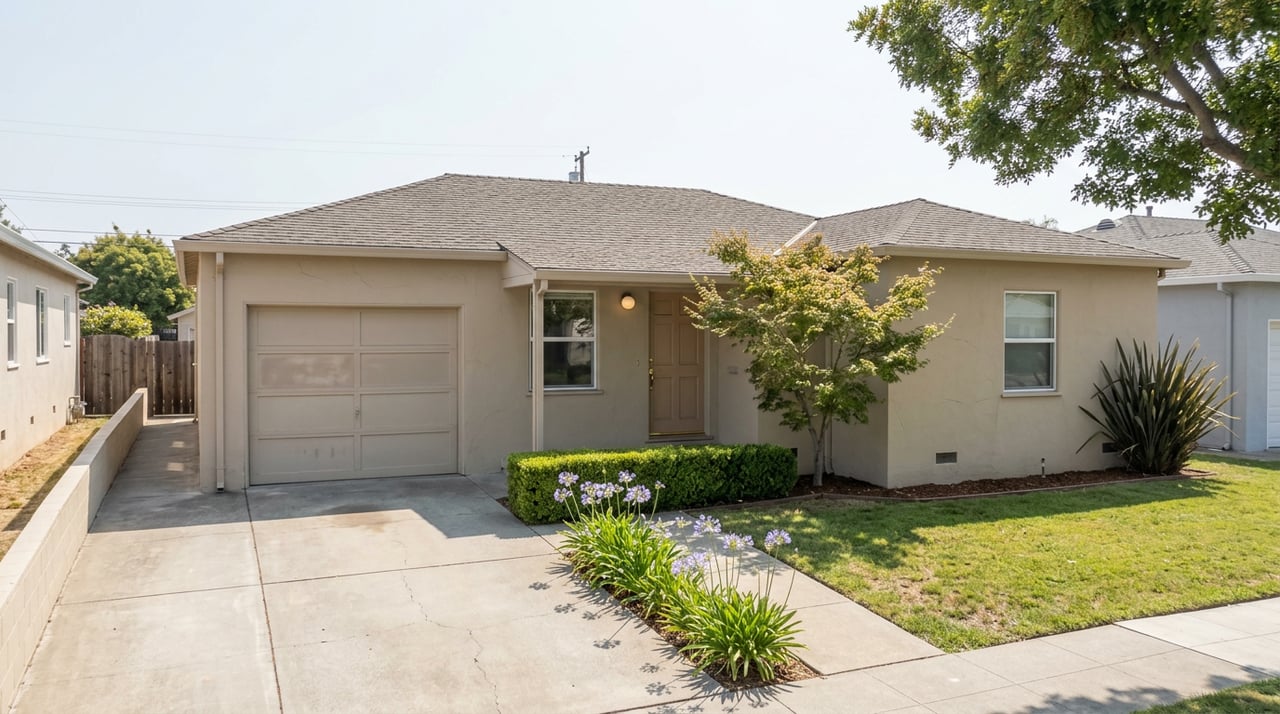
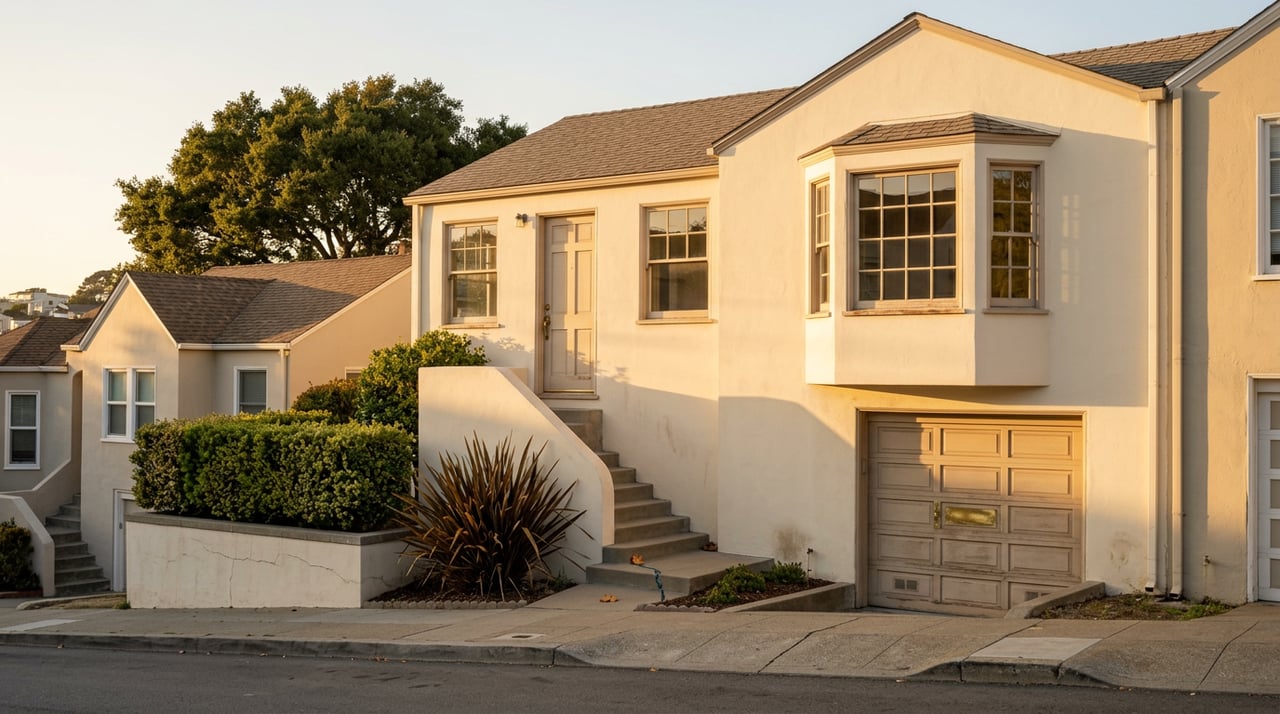
San Bruno's housing stock splits along old lines. Belle Air Park, established in 1905, is full of 1930s through 1950s bungalows and cottages on small lots close to downtown and the Caltrain corridor. It's the kind of flatland grid that anyone who grew up in San Francisco's Sunset or Richmond districts would recognize immediately, and Belle Air Park is explicitly identified as sitting under an active flight path. Crestmoor and Rollingwood, built mostly between 1950 and 1970, climb into the hills on curving streets, with some Crestmoor lots looking out toward the Bay.
The assumption buyers make is that elevation solves the noise question. It doesn't, cleanly. Rollingwood listings themselves note that airport and freeway noise can still be noticeable despite the hillside setting. So the honest answer is that exposure in San Bruno isn't a tidy map with a hard line between "noisy" and "quiet" neighborhoods. It varies by block, by the specific approach or departure pattern a plane is flying that day, and by whether a house has already been treated for it. That granularity is exactly why the state disclosure has to be blunt. It can't capture what only a parcel-level record can.
Here's the document that does vary, and it's not in the marketing packet. For decades, SFO has offered qualifying homes in the highest-noise areas free acoustical upgrades, funded in significant part by the FAA, through what's called the Noise Insulation Program. The program runs in three named tracks: a Second Chance Initiative, an Expanded Eligibility Initiative, and a Repair or Replacement Initiative for homes whose earlier installations have since failed. A construction contract from an Expanded Eligibility phase covered up to 47 residential properties across Millbrae, San Bruno, and South San Francisco, evidence that the program was still awarding new insulation work well past the original 1980s push, not frozen in it.
The upgrades themselves are real and valuable: replacement windows and doors, added insulation, and in many cases new central ventilation so residents don't have to choose between airtight soundproofing and fresh air. None of that costs the homeowner anything to install. But it isn't free in the sense of no strings attached. The SFO Replacement and Second Chance Noise Insulation Initiative describes the exchange: the property owner grants a perpetual avigation easement to SFO and the City and County of San Francisco. A California Senate committee analysis describes the easement as granting the airport an unobstructed right-of-way through the airspace above the lot at any altitude, the right to subject the property to noise, vibration, and fumes from normal operations, the right to prohibit new structures or trees that would intrude into that airspace, and the right to enter the property to trim or mark anything that does. Owners who accept the insulation also give up the right to later sue the airport over the noise the upgrade was meant to address, as SFGate reported.
This is the piece a listing sheet won't spell out. Two homes on the same Belle Air Park block can carry different histories: one insulated in an earlier NIP phase with an easement already recorded, the other never enrolled and still exposed to whatever noise the neighborhood gets on an ordinary flight day. A buyer comparing the two on price alone is missing the actual difference between them.
If you're buying in San Bruno, especially in Belle Air Park, San Bruno Park, or any flatland block close to downtown, ask your agent to pull the preliminary title report before you get attached to a property. Recorded easements, including avigation easements, show up in the title exceptions section. That single page tells you more than the disclosure form does.
A short list worth working through with your agent:
If you're selling a home that already carries NIP upgrades, don't treat that history as something to downplay. Upgraded windows, added insulation, and a functioning ventilation system are genuine, no-cost improvements that a buyer would otherwise pay to install themselves. The easement that came with them is one part of that history, so there's nothing gained by burying it in the disclosure packet instead of naming it as a feature.
Does an avigation easement lower a home's resale value? The easement itself doesn't change what a home is worth. What matters to buyers is the noise exposure that already exists on that lot, easement or not. A recorded easement usually means the property already received free soundproofing to address that exposure, which is a point in its favor, not against it.
Is every home in San Bruno subject to the same airport disclosure? Yes, because the disclosure requirement is triggered by distance from the airport under state law, and the entire city falls within that radius. The disclosure being uniform is exactly why it can't tell a buyer which specific properties have already been treated for noise and which haven't.
If you're weighing a specific San Bruno address and want to know what's actually recorded against it before you write an offer, or you're getting ready to list a home that's already been through the Noise Insulation Program and want that history presented the right way, Michael Soon can walk the title report with you and explain exactly what you're looking at. Schedule a free neighborhood consultation and bring the address.
This article is general information, not legal, tax or financial advice. Consult a qualified professional about your situation.
Stay up to date on the latest real estate trends.
Understanding his client's goals has helped Michael negotiate successful outcomes buyers and sellers on all types of properties throughout the San Francisco region. Real estate, whether buying or selling, can be quite a journey, and Michael will be there every step of the way.