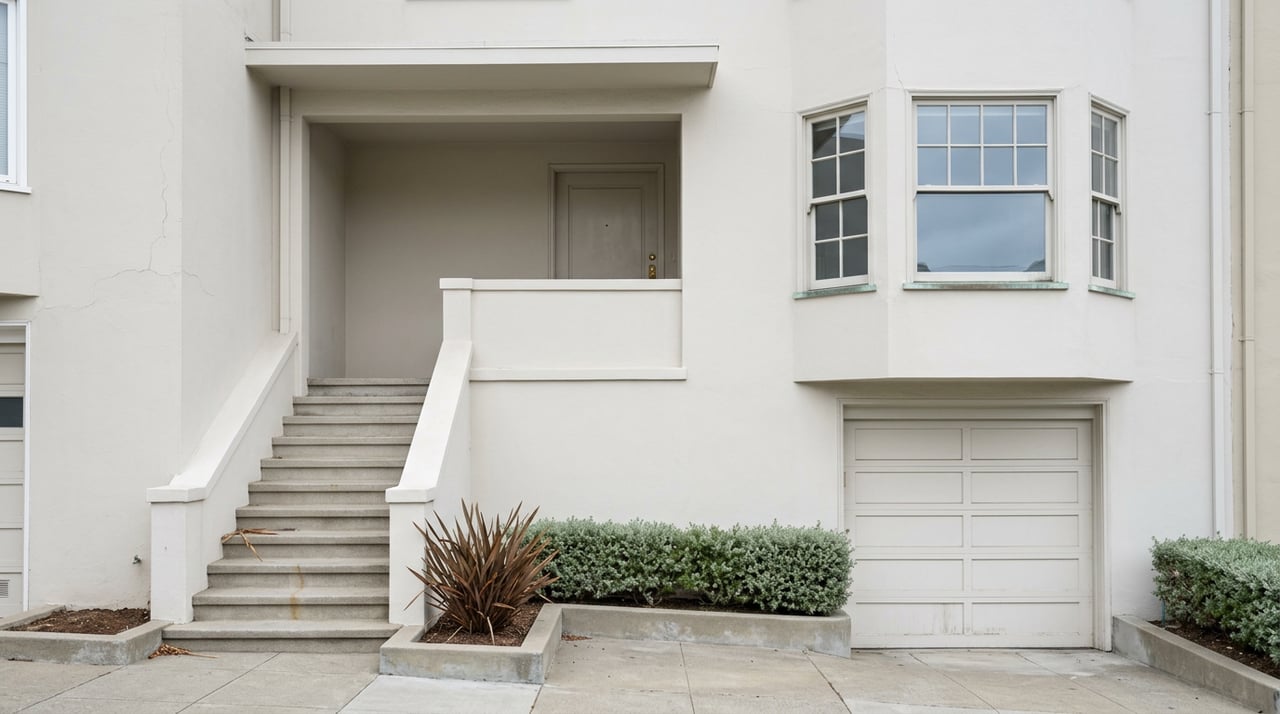
Richmond vs. Sunset Home Prices in San Francisco
September 3, 2026
September 3, 2026
Picture two buyers walking into their agents' offices this summer with identical two million dollar pre-approvals. One starts touring homes in the Sunset. The other starts touring homes in the Richmond District. On paper, they are shopping the same market. Both districts have posted medians in roughly the same $1.9 million to $2 million range for months. By the time each buyer closes, though, they will have had almost nothing in common. One waived every contingency and closed in twelve days after a bidding war that pushed the price well past asking. The other negotiated, took a bit longer, and walked away with a completely different kind of property.
That gap is the part the median price never tells you.
Sunset District's median sale price sat at $1.9 million over the three months ending in June 2026, up 18.8 percent year over year, with a median price per square foot of $1,220, also up about 19 percent. Citywide sales data for the three months ending in May 2026 put Inner Richmond's median right around $2.0 million as well, with Outer Richmond landing in the same range. Two districts, same season, same rough figure on the sign.
That is where the similarity ends.
The medians converge. The behavior around them does not. A market report covering Sunset closings through the second quarter of 2026 found sale-to-list price ratios at 138 percent in Central Sunset, 137 percent in Inner Sunset, and 144 percent in Outer Sunset, up sharply from a 100 to 117 percent range back in 2023. Homes were closing in a median of about twelve days. Richmond District sales from March 2026 tell a calmer story: Inner Richmond closed at 117.9 percent of list, and Outer Richmond at 111.2 percent.
| Sub-Area | Sale-to-List Ratio | Timeframe |
|---|---|---|
| Outer Sunset | 144% | Q2 2026 |
| Central Sunset | 138% | Q2 2026 |
| Inner Sunset | 137% | Q2 2026 |
| Inner Richmond | 117.9% | March 2026 |
| Outer Richmond | 111.2% | March 2026 |
A buyer who assumes Richmond and the Sunset require the same offer strategy is bringing an Outer Richmond mindset to an Outer Sunset bidding war, and that mismatch shows up fast once the counteroffers start.
Richmond's own median hides a split just as large. Inner Richmond's price per square foot ran $1,390 over the three months ending in May 2026, up 28 percent year over year. Outer Richmond's sat at just $996 over the same window, up only 2.3 percent. On an 1,800 square foot home, that difference works out to roughly $709,000 between the two halves of a district that a portal search will show you as one neighborhood.
A Richmond median by itself does not tell you which half of the neighborhood you are actually shopping. That distinction is worth close to three quarters of a million dollars on an average-sized house.
Part of that gap comes down to what is actually for sale. Citywide planning data shows the Richmond Planning District carries about 37,760 housing units and ranks near the top of San Francisco's neighborhoods for both 2-to-4-unit buildings and 5-to-9-unit buildings, even while it also holds a large stock of single-family homes. A market report on Central Richmond backs this up with real numbers: single-family homes there closed at a $2.62 million median over the trailing six months through June 2026, while condos ran closer to $1.76 million and two-unit buildings sat around $1.95 million, all up about 8 percent year over year across 102 total sales.
The Sunset, by comparison, is still overwhelmingly single-family and two-unit rowhouses built to a similar narrow-lot template block after block. That is a meaningful difference for a buyer weighing a house against a duplex with rental income, or for an investor who wants flexibility in layout and use rather than one dominant housing format.
Richmond's calmer bidding reflects a market anchored by commercial life that has been there for decades. Clement Street's density of restaurants and markets includes Chapeau, a French restaurant marking roughly 30 years in Inner Richmond, and Burma Superstar, still drawing lines for its tea leaf salad. Central Richmond's housing stock is largely pre-war, built between 1915 and 1927, so buyers there are underwriting condition and renovation rather than chasing something newly built. Inventory stayed tight too. Only about 20 single-family homes closed in that Central Richmond report's trailing six-month window, which is part of why well-prepared listings still moved in under two weeks even without Sunset-level overbidding.
The Sunset's price surge has a different engine. Sunset Dunes, a 50-acre oceanfront park running two miles between Lincoln Way and Sloat Boulevard, opened April 12, 2025, and logged more than 1.7 million visits by its first anniversary. New operators are following that foot traffic. Two Pitchers Brewing Company and the smashburger stand Maillards opened a shared permanent location at 3821 Noriega Street on April 22, 2026, after three years of Maillards running a stall at the Outer Sunset Farmers Market. Ruby's opened near Judah and 48th Avenue in the former Beach'n space in late October 2025. Black Jet Luncheonette, a second location for Bernal Heights' Black Jet Baking Co., is planned for a Judah Street storefront that previously held Trouble Coffee and DamnFine Coffee. One of Two Pitchers' co-owners pointed directly to Sunset Dunes and demand for new west-side gathering spots as the reason for the location. Coffee shops are filling in behind the restaurants too. Mission Local's coverage of the corridor documented Bean Dream opening at 1131 Taraval Street and Jandii Cafe opening across the street at 1100 Taraval, both in May 2026.
Even inside that boom, the Sunset isn't one uniform market. In July 2026, a Neighborhood Vibrancy Fund began offering grants of $5,000 to $20,000 to as many as 20 small businesses to fight ongoing storefront vacancies along Irving Street in the Inner Sunset, while UCSF has funded 42 new street trees along Irving, Judah, Hugo, and Ninth Avenue over the past two years to make the corridor feel less bare. Homes near there still sell fast. The storefronts next to them needed a subsidy to fill their windows. That is worth remembering before treating "the Sunset" as one behavior instead of several.
Freddie Mac's own June 2026 survey put the 30-year fixed rate at 6.49 percent, the backdrop both of these markets are transacting against. Against that rate, the two million dollar budget behaves differently depending on where you point it. Sunset District right now is a seller's market squared: twelve-day closes, contingencies waived as a matter of course, and a real chance of paying well above list. Outer Richmond currently offers both a calmer sale-to-list ratio and a meaningfully lower cost per square foot, along with more format options if a duplex or small multi-unit building fits your plans. Inner Richmond sits between the two, priced for walking distance to Clement Street and moving faster than Outer Richmond, but nowhere near Sunset intensity.
The same two million dollars produces three different experiences depending on which specific corridor you choose, not just which district name is on the listing.
Is the Richmond District actually cheaper than the Sunset right now? Not simply. District-wide medians for both sit within about $100,000 of each other as of this year's spring and summer sales. The real difference shows up inside Richmond, where Outer Richmond runs roughly $394 less per square foot than Inner Richmond, a split the Sunset's more uniform pricing does not have.
Where is buyer competition the fiercest right now? Outer Sunset's 144 percent sale-to-list ratio in the second quarter of 2026 was the highest of any sub-area covered here. Outer Richmond's 111.2 percent in March 2026 was the calmest.
If you are weighing these two markets against your own budget and timeline, the sub-neighborhood you choose matters as much as the district name. Michael Soon works both corridors and can walk you through what a specific block, property type, and offer strategy actually look like right now. Schedule a free neighborhood consultation to get started.
Stay up to date on the latest real estate trends.
Understanding his client's goals has helped Michael negotiate successful outcomes buyers and sellers on all types of properties throughout the San Francisco region. Real estate, whether buying or selling, can be quite a journey, and Michael will be there every step of the way.