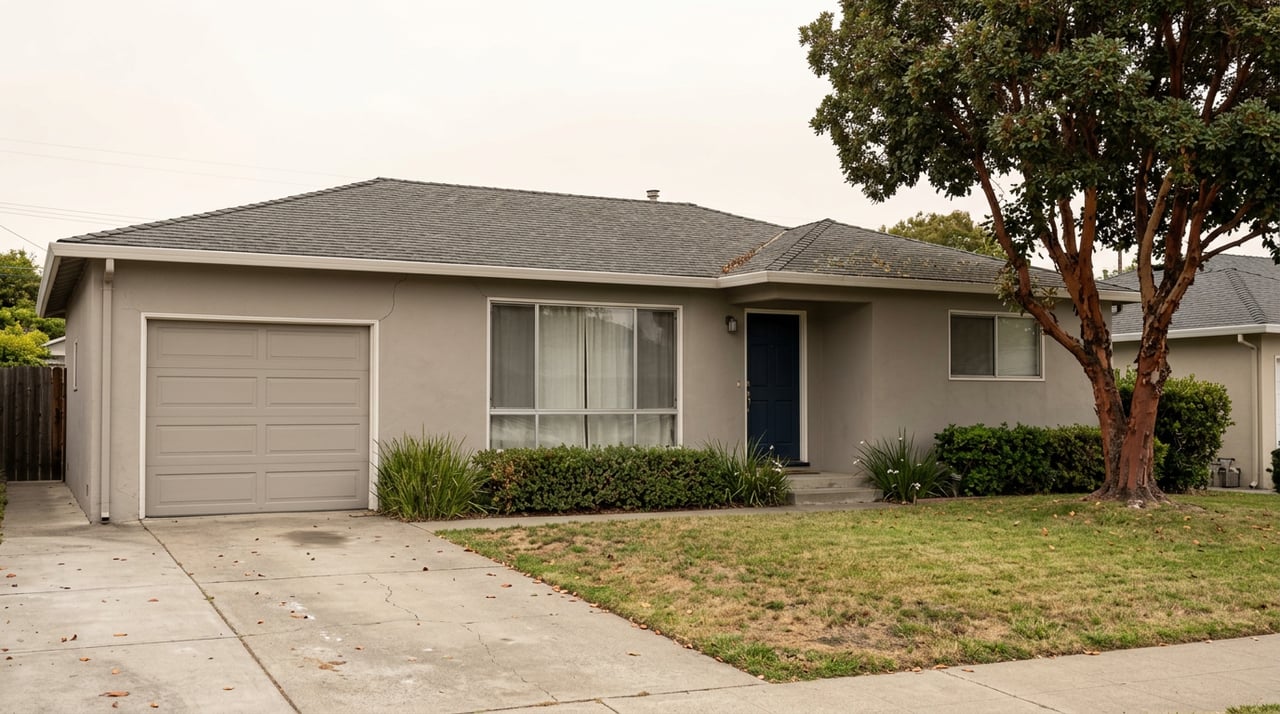
South San Francisco's Weekend Doesn't Start at the Sign on the Hill
August 27, 2026
August 27, 2026
Drive north on Highway 101 past the airport and you'll see it before you see anything else: eleven concrete letters spelling out SOUTH SAN FRANCISCO THE INDUSTRIAL CITY, stamped into the south face of a 581-foot hill since the 1920s. It's been on the National Register of Historic Places since 1996, and for most of the year it's been the color it always was, plain white, legible from a moving car at highway speed. This summer it isn't. And the story of why says more about how this city actually works than the sign itself does.
Because here's the thing nobody says out loud when they list off what's new in South San Francisco this year: the two most talked-about changes, a repainted landmark and a splashy new food hall, were both built to be seen from outside the city. The stuff that actually makes a Saturday here work was built for people who already live past the exit. This summer just made the gap between the two more obvious than usual.
In early June, about 75 volunteers climbed Sign Hill and repainted the letters red, blue, and white to mark the country's 250th anniversary. Genentech, the life science company founded and based in the city, funded the project, and the South San Francisco Planning Commission signed off after ruling it reversible and routine.
The color order wasn't arbitrary. City spokesperson Angenette Lau explained that the sequence was chosen so "The Industrial City" would read brighter than "San Francisco," a deliberate move to keep the city from being mistaken for its more famous neighbor to the north. It's a small, telling detail: this sign has always been aimed outward, at drivers who might otherwise not know where they are, not at the people who already do.
The reaction proved the point. Within days, residents and visitors were complaining that the darker red and blue letters blended into the hillside from a distance, leaving only "THE INDUSTRIAL CITY" clearly readable. "I just prefer it white," one San Francisco visitor told ABC7, echoing a sentiment that showed up across social media all summer.
What almost nobody mentioned in that debate is that Sign Hill Park is also a place you can walk, not just a billboard you drive past. The park covers 30 acres with close to two miles of hiking trails, and the Ridge, Seubert, and Letters Loop, a 1.4-mile route with 488 feet of elevation gain starting at the dead end of Poplar Avenue, takes you up close enough to stand among the letters themselves. That's a completely different relationship to the same object: not something you glance at from a car window, but something you climb to.
The other headline this summer sits down the hill, inside BioMed Realty's Gateway of Pacific campus at 800 Gateway Boulevard. On June 16, the Omakase Restaurant Group opened Omakase World Market, a 50,000-square-foot food hall with six concepts under one roof: Dumpling Time, Ichiba by Omakase for sushi, The Butcher Shop by Niku for its smashburger and Kobe-grade cuts, Campo for pizza and pasta, Cuisinett for French rotisserie and salads, and Kyoto Senses for pastries and matcha.
It's a genuinely ambitious project, and it's visible the way corporate campuses in this city tend to be: glassy, landscaped, built to look impressive from Gateway Boulevard. But the campus runs on badge access, which means the food hall's hours follow the workweek that built it, not the weekend that residents actually have off. If your plan is a Saturday afternoon at the city's newest food destination, you'll want a backup plan. The smashburger is real, but it's a weekday lunch, not a weekend outing.
That's the pattern showing up twice in one summer. A landmark repainted to be legible from the freeway. A food hall built to be admired from the road outside a security lobby. Both visible. Neither, on a given Saturday, entirely usable by the people who live two blocks away.
The infrastructure that doesn't care what day it is sits elsewhere, mostly out of view from 101.
The Centennial Way Trail runs above the underground BART line, connecting the South San Francisco and San Bruno stations with a paved, lit path and a dedicated dog park along the route. Ask three sources how long it is and you'll get three different numbers, which itself tells you something about how the trail actually grew.
| Source | Reported length |
|---|---|
| Komoot route data | 5.5 miles |
| Older city coverage (Orange Memorial Park section only) | 3 miles |
| AllTrails, BART station to BART station | 2.4 miles |
The trail was built in phases over more than a decade, not all at once, so nobody's really wrong. It's just been stitched together piece by piece for residents walking to a train, not laid out in one shot for a map to describe neatly.
The South San Francisco Certified Farmers' Market runs every Saturday, year-round, from 9 a.m. to 1 p.m. at Orange Memorial Park, 781 Tennis Drive. San Mateo County's own listing confirms it accepts CalFresh, WIC, and Senior Farmers' Market Nutrition Program benefits, which changes who actually shows up and what growers bring to sell. This isn't a market built for a photo. It's grocery infrastructure for a working city, and it got far less attention this year than either the sign or the food hall, despite doing more for more people every single week.
Down at the bay, Oyster Point Marina and Park covers 33 acres with a 408-berth marina, a 2.5-acre sandy beach, a fishing pier, and a hiking and jogging trail that ties into the Bay Trail's local stretch, which the city describes as a continuous six-mile linear park along the bayfront. The site has been jointly run by the City of South San Francisco and the San Mateo County Harbor District since a Joint Powers Agreement dating back to 1977, and it's open daily from 6 a.m. to 10:30 p.m., dog-friendly, no badge required. The Oyster Point Dragons dragon boat team still trains out of the marina if you want to watch, or ask about joining a paddle.
The city's own recreation calendar has kept running underneath all of this, and it's worth putting on your phone before the fall version fills in:
None of it requires a reservation, a badge, or a car ride to Brisbane or San Bruno for a proper evening out. It's just been running quietly in the same park all summer, the same way the farmers' market has, while the freeway-facing stories got the headlines.
The version of South San Francisco visible from 101 got a paint job and a corporate food court this year. The version that actually functions as a neighborhood, the trail to the train, the market that takes CalFresh, the marina the county has co-run since Carter was in office, the free movie night moved indoors because someone on staff knows the wind pattern, was already here and didn't need a headline. If you're deciding where to spend Saturday morning, start at Orange Memorial Park or the Oyster Point trailhead, not the Gateway Boulevard parking lot.
If you're a longtime resident weighing what these summer changes mean for the neighborhood, or you're curious how a market that keeps quietly building resident-first infrastructure tends to hold its value over time, Michael Soon is always happy to talk it through over a neighborhood consultation, no pressure, no badge required.
Stay up to date on the latest real estate trends.
Understanding his client's goals has helped Michael negotiate successful outcomes buyers and sellers on all types of properties throughout the San Francisco region. Real estate, whether buying or selling, can be quite a journey, and Michael will be there every step of the way.