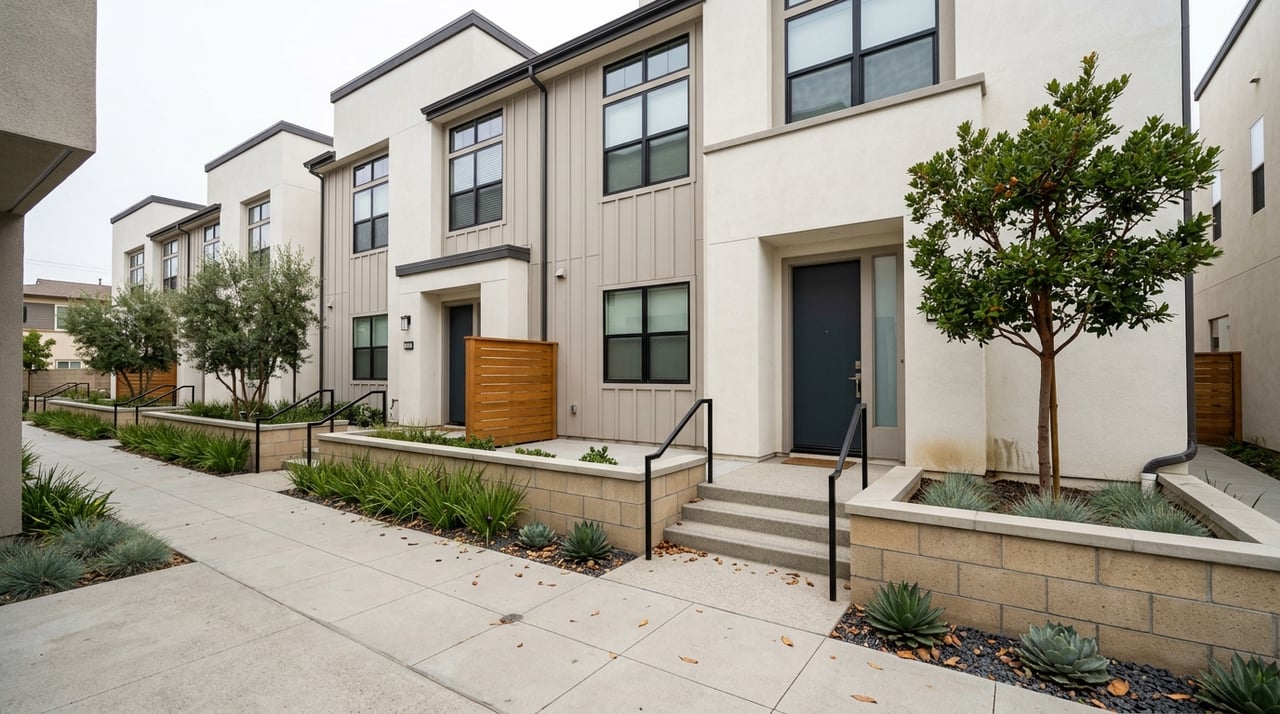
Your Guide to South San Francisco Condos & Townhomes
July 16, 2026
July 16, 2026
Wondering whether a condo or townhome in South San Francisco is the right move? You are not alone. For many buyers, this city offers a more attainable path into Peninsula homeownership while still keeping major job centers, transit connections, and everyday convenience within reach. If you want to understand what attached-home options look like here, what costs to watch, and how to evaluate long-term fit, this guide will help you sort through the details. Let’s dive in.
South San Francisco stands out for buyers who want Bay Area access without stretching as far as some nearby markets. City planning documents describe it as a relatively affordable Bay Area community with strong access to major job centers, and current market snapshots support that position.
Recent listing data shows South San Francisco condos around a median listing price near $799,000, while townhomes are around a $1.1 million median listing price. Zillow places the city’s overall home value near $1.24 million, and Redfin’s San Francisco condo snapshot is around $999,000. For many buyers, that makes South San Francisco a practical alternative if San Francisco pricing feels out of reach.
The city also benefits from steady housing demand tied to employment. South San Francisco reports a biotech cluster of more than 250 companies, with about 3.5 million square feet of biotech space under construction. That ongoing jobs base helps explain why condos and townhomes remain appealing to buyers who want a home with less maintenance and good regional access.
Attached housing in South San Francisco covers a broad range of formats. You may find smaller one-bedroom condos, newer mid-size units, and multi-level townhome-style homes depending on your budget and space needs.
At the compact end of the market, current listings include one-bedroom condos around 670 to 887 square feet. Some newer one-bedroom homes are around 806 to 828 square feet. Townhome-style homes often offer two to three bedrooms and roughly 1,100 to 1,460 square feet, often spread across multiple levels.
That variety matters because your daily routine should shape your home search. If you want simpler ownership and lower space needs, a one-bedroom condo may fit well. If you need more bedrooms, more separation between living areas, or an attached garage, a townhome-style property may be the better match.
Amenities can vary a lot by building and community. Some projects include secured or gated access, balconies or patios, and underground or attached garage parking. Larger developments may also offer shared amenities such as a pool, gym, sauna, recreation room, or common patio.
In some newer developments near transit, buyers may also see open-concept layouts, large windows, and noise-mitigating features. Those details can make a real difference if you expect to commute regularly or want a more modern interior feel.
It is also worth remembering that amenities affect monthly ownership costs. A building with more shared features may offer convenience, but it can also come with higher HOA dues. That is why it helps to compare both lifestyle value and long-term budget impact.
Not all attached homes in South San Francisco feel the same. City planning documents reference subareas such as Downtown/Old Town, El Camino Real, Terrabay, Sign Hill, and East of 101, and each can offer a different living experience.
Some buyers prefer being closer to the station and transit connections. Others focus on hillside settings, townhome-style layouts, or proximity to business parks and employment centers. The right fit often depends on whether you prioritize commute convenience, layout, parking, or a specific type of building.
When you tour homes, try to compare more than the unit itself. Pay attention to street access, building style, parking setup, and how the location fits your weekly routine. A home that looks great on paper may feel very different once you consider your actual day-to-day pattern.
When you buy a condo or townhome in a California common-interest development, you automatically become a member of the homeowners association. The HOA collects assessments to fund maintenance and shared facilities, and disclosure rules are designed to provide information about CC&Rs, costs, assessments, and use restrictions before purchase.
That means your review should go beyond the monthly dues number. A lower HOA fee is not always a better deal if the association is not saving enough for future repairs or if special assessments are likely.
California law requires annual budget reports that include reserve information, and the reserve-study framework is intended to show major components, their useful life, and the contributions needed for repair or replacement. In practical terms, buyers should review the budget report, reserve summary, reserve study, and assessment history before moving forward.
A strong HOA review can help you avoid surprises after closing. It can also help you compare two properties that look similar at first glance but carry very different long-term costs.
Here are a few items to focus on:
If you are deciding between two homes, ask which community appears better prepared for future maintenance. Roofs, exterior systems, shared hallways, elevators, and amenities all cost money to maintain. A well-run HOA can support value and smoother ownership over time.
Some buyers in South San Francisco may come across BMR, or Below Market Rate, units. These homes can create opportunities for eligible buyers, but they may also come with resale controls, monitoring, and additional restrictions.
That is why it is important to confirm whether a listing is part of a special housing program before you get too far into the process. Program rules can affect eligibility, future resale, and transfer conditions.
If you are considering a BMR unit, make sure you understand the disclosure package and program requirements early. A home that seems like a great value may follow a different ownership path than a standard market-rate condo or townhome.
Transit access is one of South San Francisco’s biggest draws for many buyers. South San Francisco Station was rebuilt with a 700-foot center-boarding platform, a pedestrian underpass, West Plaza, and ADA accessibility. Caltrain also lists weekday shuttles to South San Francisco business parks and Oyster Point Ferry destinations, and SamTrans connections serve the station as well.
For broader regional connections, Millbrae BART offers a cross-platform connection to Caltrain, and BART also serves SFO. If your week includes office commutes, airport trips, or travel across the Peninsula and into San Francisco, those links can be a meaningful advantage.
Still, the key question is not just whether transit exists nearby. It is whether the home’s parking, storage, HOA rules, and location support the way you will likely live over the next five to ten years. That long-term fit often matters more than the initial excitement of a new listing.
The best condo or townhome is not always the newest one or the one with the flashiest amenities. It is the one that supports how you actually live.
If you want low-maintenance ownership and a simpler footprint, a compact condo may be the right choice. If you work from home, need more separation, or want a garage and multi-level living, a townhome may give you more flexibility.
It also helps to think ahead. Consider whether your commute could change, whether storage will matter more in a few years, or whether stairs will be a benefit or drawback long term. A thoughtful purchase is usually about both today’s needs and tomorrow’s routine.
Before you make an offer, keep this checklist handy:
Buying attached housing is often about details. The more clearly you understand those details before writing an offer, the more confident you can feel in your decision.
If you are comparing condos and townhomes in South San Francisco and want a clear, practical second opinion, Michael Soon can help you evaluate layouts, HOA documents, commute fit, and the bigger picture so you can move forward with confidence.
Stay up to date on the latest real estate trends.
Understanding his client's goals has helped Michael negotiate successful outcomes buyers and sellers on all types of properties throughout the San Francisco region. Real estate, whether buying or selling, can be quite a journey, and Michael will be there every step of the way.