San Bruno Commute Neighborhoods & Home Options
April 16, 2026
April 16, 2026
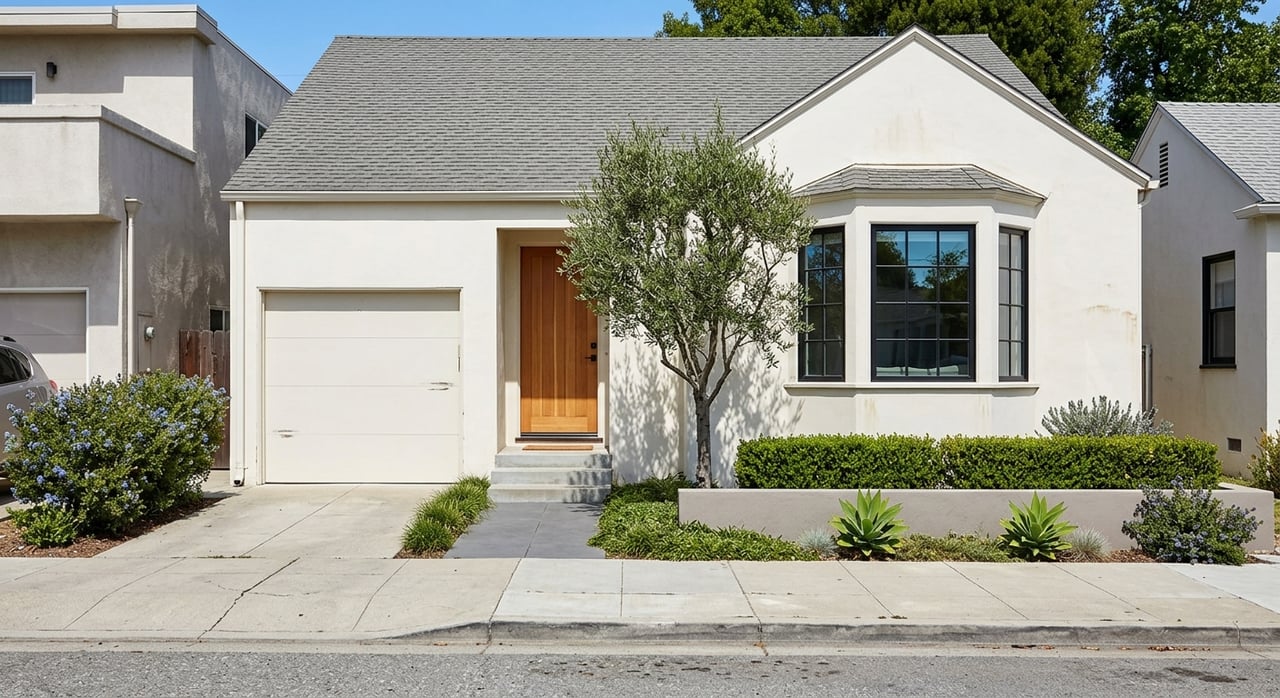
If your workweek depends on smooth access to San Francisco, SFO, or the Peninsula, San Bruno deserves a closer look. It gives you a rare mix of BART, Caltrain, SamTrans, and freeway access in one small city, but not every part of San Bruno lives the same way. Some areas put you closer to stations and commercial corridors, while others trade convenience for more space, lower density, or a quieter residential feel. In this guide, you’ll get a practical look at San Bruno’s commuter-friendly areas, transit setup, and the kinds of homes you’re most likely to find. Let’s dive in.
San Bruno stands out because it offers more than one way to get around. According to the City of San Bruno public transit overview, the city is served by BART, Caltrain, and SamTrans, including Route ECR, which runs every 15 minutes on weekdays and every 20 minutes on weekends.
That mix matters if your schedule changes from day to day. You may want BART for San Francisco trips, Caltrain for Peninsula or South Bay commutes, or freeway access when driving makes more sense. In a lot of suburbs, you pick one. In San Bruno, you have options.
San Bruno is easiest to understand as a group of smaller commute zones rather than one uniform market. The city’s land use documents show a clear pattern, with more mixed housing and commercial activity in the east and lower-density residential areas farther west.
Areas such as San Bruno Park, Belle Air Park, and Lomita Park are identified by the city as mixed single-family and multifamily neighborhoods. The eastern half of San Bruno also has the strongest mix of housing types and older grid-style streets, based on the city’s land use analysis.
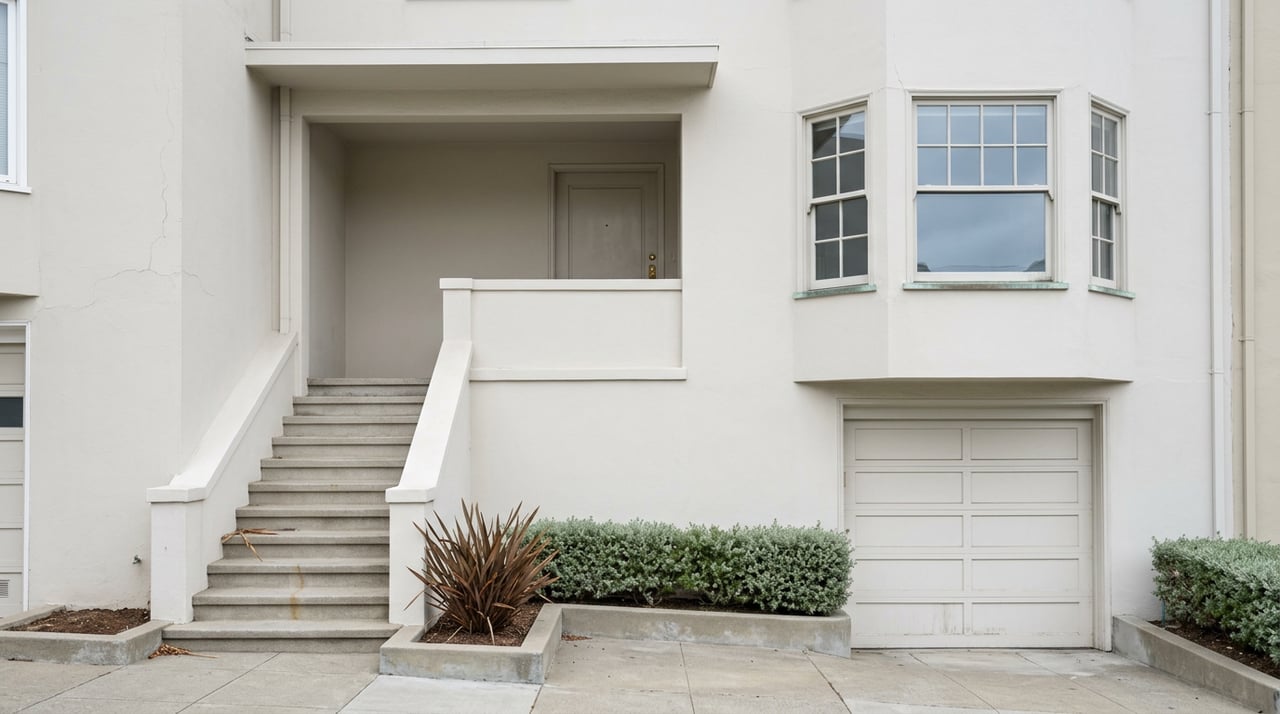
For you as a commuter, this part of town may feel more practical if you want a flatter street network and easier access to daily destinations. It is also one of the better places to start if you want attached housing options, lower-maintenance living, or a more urbanized setting within San Bruno.
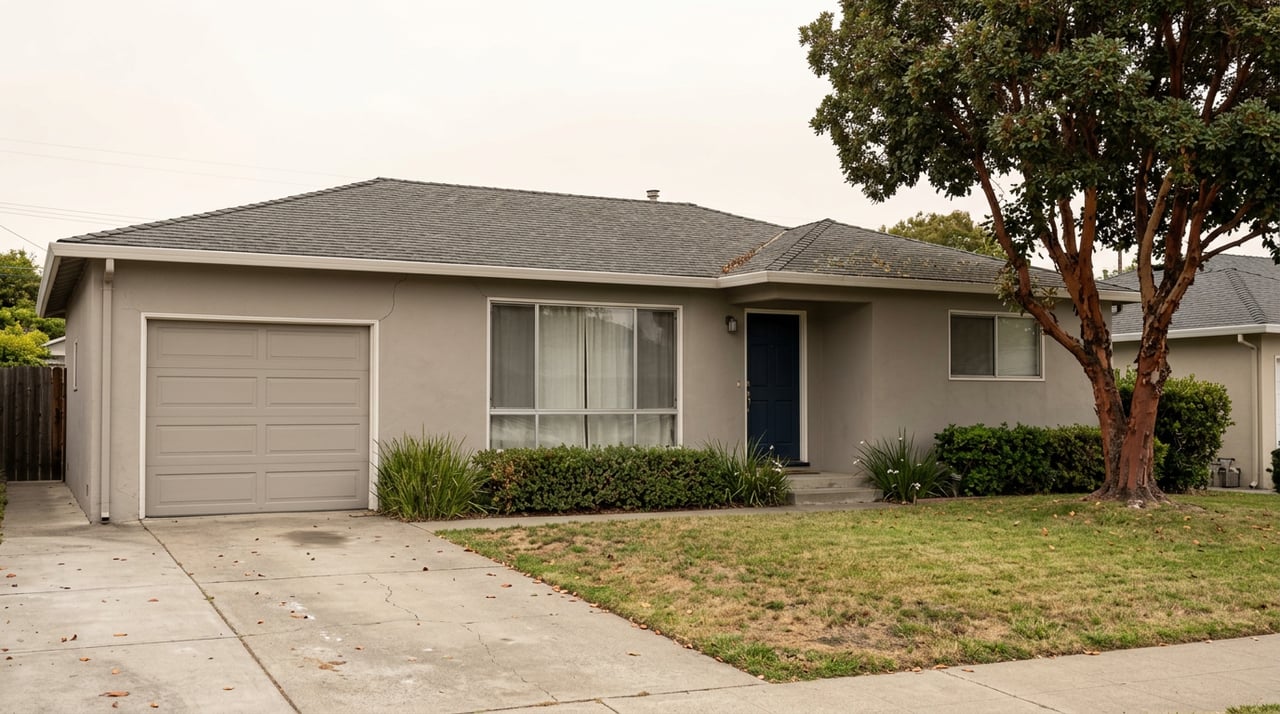
Mills Park and Huntington Park are classified by the city as single-family neighborhoods. In practical terms, these areas tend to align more with detached-home living than the transit-corridor blocks to the east.
If you want a traditional house profile but still want to stay connected to the city’s main transportation routes, this middle section often becomes the compromise zone. You may give up some station-adjacent convenience, but you often gain a more residential setting.
Neighborhoods including Crestmoor, Rollingwood, Pacific Heights, Portola Highlands, and Monte Verde are described in city planning materials as lower-density hillside neighborhoods. That usually means more topography, more privacy, and less direct rail access than the flatter eastern sections of San Bruno.
For buyers, this part of the city often fits best if commute convenience matters, but space and separation matter too. It is generally the area to watch if your priority is a more detached-home-oriented environment rather than immediate station access.
The city identifies San Mateo Avenue between Huntington Avenue and El Camino Real as downtown and calls it the city’s most unique commercial area in its planning documents. For commuters, this is the most obvious part of San Bruno to consider if you care about walkability, station access, and a more mixed-use setting.
This area also matters because future change is likely to keep concentrating around transit-oriented corridors. If you like being close to shops, restaurants, and transportation, downtown San Bruno is one of the clearest places to focus your search.
Bayhill is less of a traditional home search neighborhood and more of an employment center. The city says Bayhill is San Bruno’s largest office cluster, and its planning framework includes future residential, hotel, civic, open-space, and multimodal transportation elements, as outlined in the Bayhill overview.
If you work nearby, Bayhill can still shape where you want to live. It may influence whether you prioritize car access, bike connections, or a location that keeps your last-mile commute simpler.
A commuter-friendly city is only as good as its actual transportation network. San Bruno has a stronger transit stack than many Peninsula suburbs, and each option serves a different kind of rider.
San Bruno Station is located at 1151 Huntington Avenue next to Tanforan. BART lists service on the Antioch to SFIA/Millbrae and Richmond to Millbrae/SFIA lines, and the station page includes details on daily, carpool, reserved, and monthly parking, plus bike lockers.
If your routine includes downtown San Francisco, SFO, or regional transfers, BART is often the strongest rail option in town. Parking and bike storage also make it more realistic if you do not live within walking distance of the station.
For Peninsula and South Bay commuters, Caltrain is a major part of the appeal. Caltrain’s stations and zones page places San Bruno in Zone 1, and the system notes that most stations offer parking and bicycle access.
That gives you another lane of flexibility. If your job or routine pulls you south more often than north, living near Caltrain can be just as important as living near BART.
Bus service fills in the gaps that rail cannot cover. The city’s transit information notes that SamTrans Route ECR offers frequent service along El Camino Real, which supports local trips and connections to other transit modes.
The city’s Walk n Bike Plan adds another layer by calling for better links between BART, Caltrain, downtown, Bayhill, and the Shops at Tanforan. The plan also lays out a 23-mile bike network, which matters if you want to reduce daily driving and make station access easier.
If you still drive most days, San Bruno remains well positioned. City transportation materials note that I-280 runs north-south through the city, I-380 provides a short east-west connection, and Highway 101 runs along the east side.
That road network is one reason San Bruno works for many households with mixed commuting needs. One person may take rail while another drives, and the city can support both patterns reasonably well.
San Bruno is not just a detached-home market. City housing documents show that about 56% to 60% of the housing stock is single-family detached, while roughly 35% is in buildings with five or more units, depending on the dataset and year in the city’s housing documents.
That mix is important if you are trying to balance budget, commute, and maintenance. In a small footprint, San Bruno offers a wider range of product types than many buyers expect.
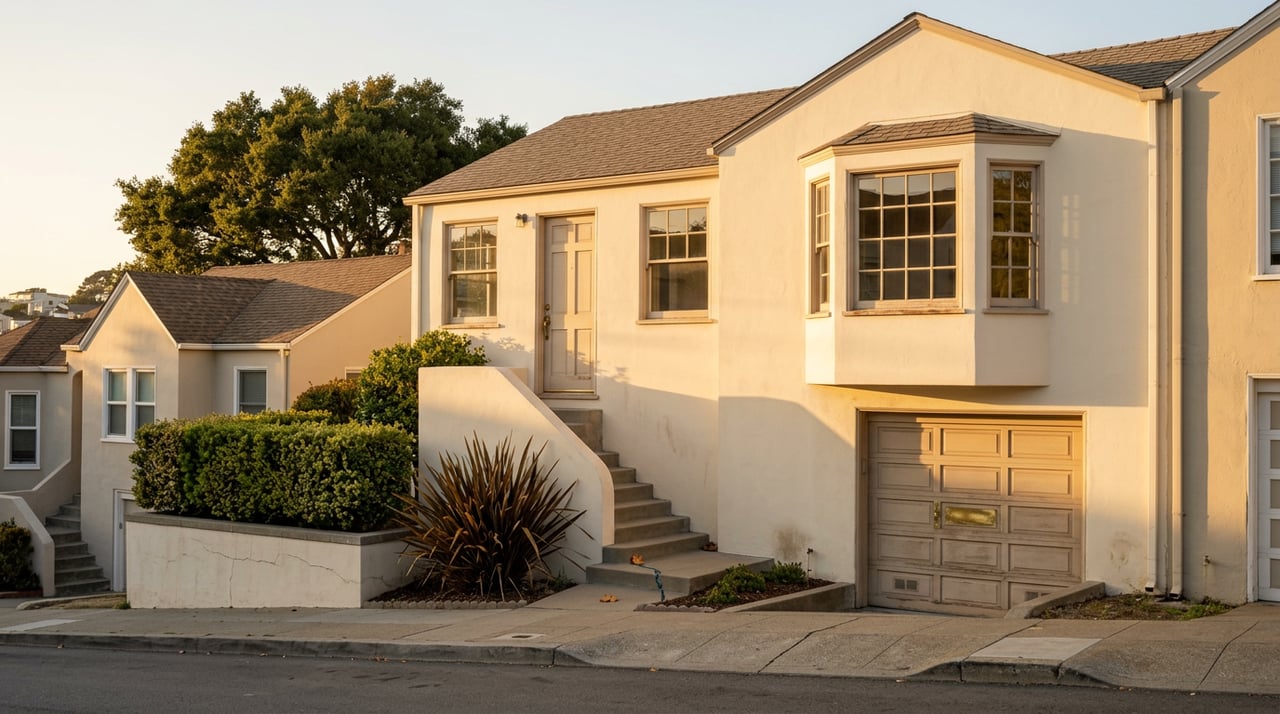
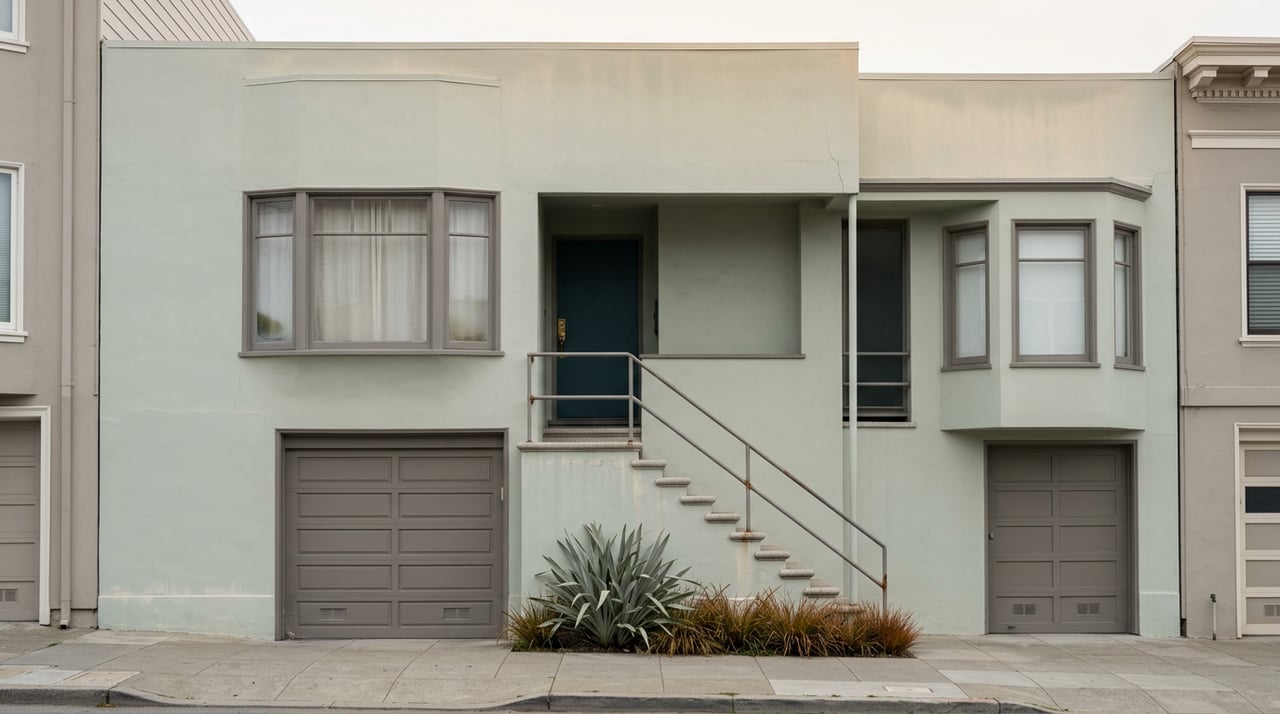
East of El Camino Real, the city’s mixed single-family and multifamily pattern makes this area a logical fit if you want more attached housing options. These locations may be especially useful if your goal is lower-maintenance ownership or a commute-focused purchase.
The city’s approved project list also points in this direction. Projects such as the 62-unit mixed-use development at 111 San Bruno Ave., Mills Park Center with 427 dwellings, and other multifamily projects along El Camino Real and Sylvan Avenue suggest that transit-adjacent parts of San Bruno are where additional housing growth is most likely, based on the city’s approved planning applications.
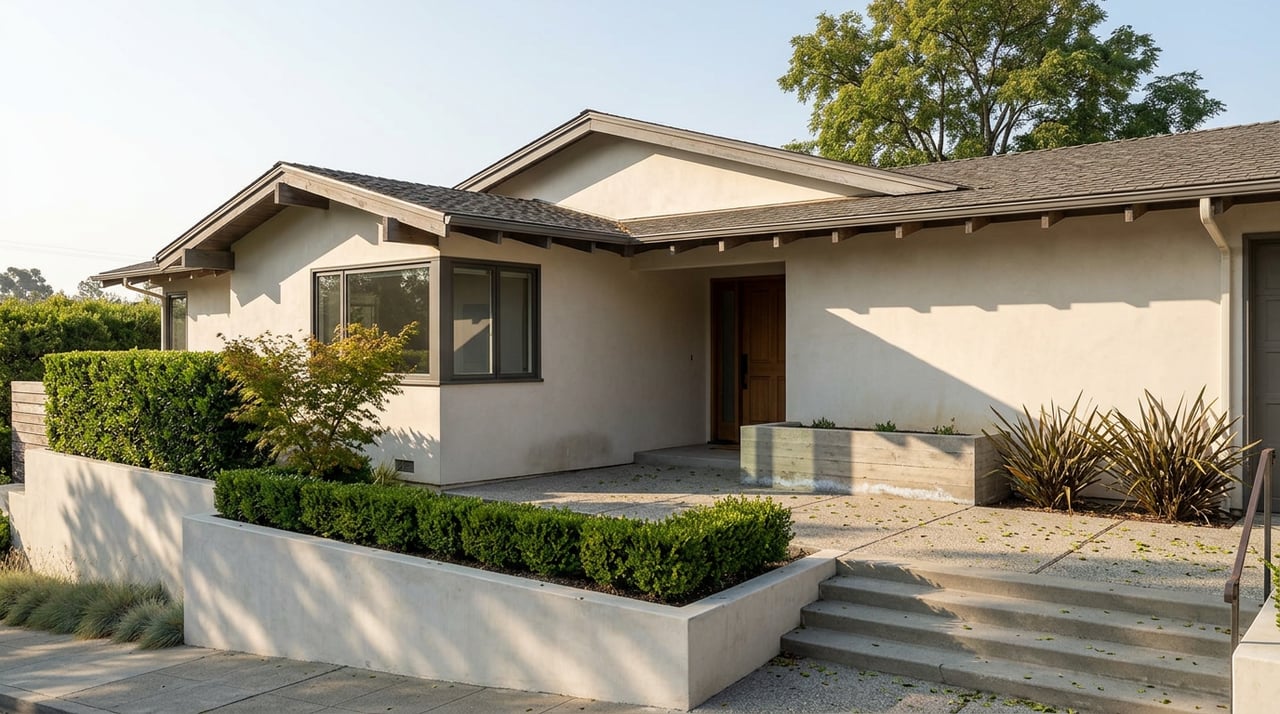
Between El Camino Real and I-280, detached homes are generally more dominant because the city classifies these areas as single-family neighborhoods. West of I-280, lower-density hillside neighborhoods continue that trend, although the city also notes several large multifamily complexes in western San Bruno.
If your priority is more indoor space, a yard, or a layout that feels less attached to surrounding development, these sections may line up better with your search. The trade-off is that rail access can feel less direct than it does in the eastern part of the city.
San Bruno also allows ADUs and JADUs on single-family and multifamily properties. That can matter if you want flexibility for multigenerational living, guest space, or potential rental use where allowed.
For some buyers, this opens up more possibilities in detached-home neighborhoods. A house can offer more than just the main living space, which changes the value equation for certain households and investors.
San Bruno is still a high-cost market, but the bigger story is the spread between home types. The research shows a wide gap between condo-level pricing and detached-home pricing, with examples ranging from a small condo sale at Shelter Creek to detached homes selling around $1.2 million to $1.9 million in recent Redfin examples.
That range can work in your favor if you want to get into the market without buying a larger house right away. It also means your commute priorities may shape your budget more than the city name alone.
If you want the easiest rail access, downtown, El Camino Real, and other station-adjacent locations are the clearest starting points. These areas are also the ones most likely to continue seeing infill and mixed-use change as San Bruno adds housing near transit.
The city’s Housing Element says San Bruno’s 2023 to 2031 RHNA target is 3,165 homes, and the city dashboard shows 629 units issued from 2023 through 2025, with 2,538 remaining. The city’s Transit Corridors Plan also supports more housing, jobs, shops, restaurants, pedestrian-oriented streets, and transportation connections near the San Bruno Avenue Caltrain station.
If you want more space and privacy, areas west of I-280 or farther from the station core may fit better. In many cases, buying in San Bruno comes down to this simple question: do you want the shortest trip to transit, or do you want more home and separation from the busiest corridors?
A smart home search in San Bruno starts with your real schedule, not just a map. Think about where you go most often, how many days a week you commute, whether you drive, and how much maintenance you want at home.
A simple way to narrow your options is to sort your priorities into three buckets:
If you are comparing San Bruno with nearby Peninsula cities, this kind of block-by-block strategy becomes especially important. Two homes with the same city label can support very different daily routines.
Whether you are looking for a commuter-friendly condo, a detached home with room to grow, or an investment property with flexibility, local guidance can save you time and help you focus on the right part of the market. If you want help weighing San Bruno neighborhoods against your commute, budget, and long-term goals, connect with Michael Soon to schedule a free neighborhood consultation.
Stay up to date on the latest real estate trends.
Understanding his client's goals has helped Michael negotiate successful outcomes buyers and sellers on all types of properties throughout the San Francisco region. Real estate, whether buying or selling, can be quite a journey, and Michael will be there every step of the way.